Sewing Class
Serger and Overlocker Classes in Austin
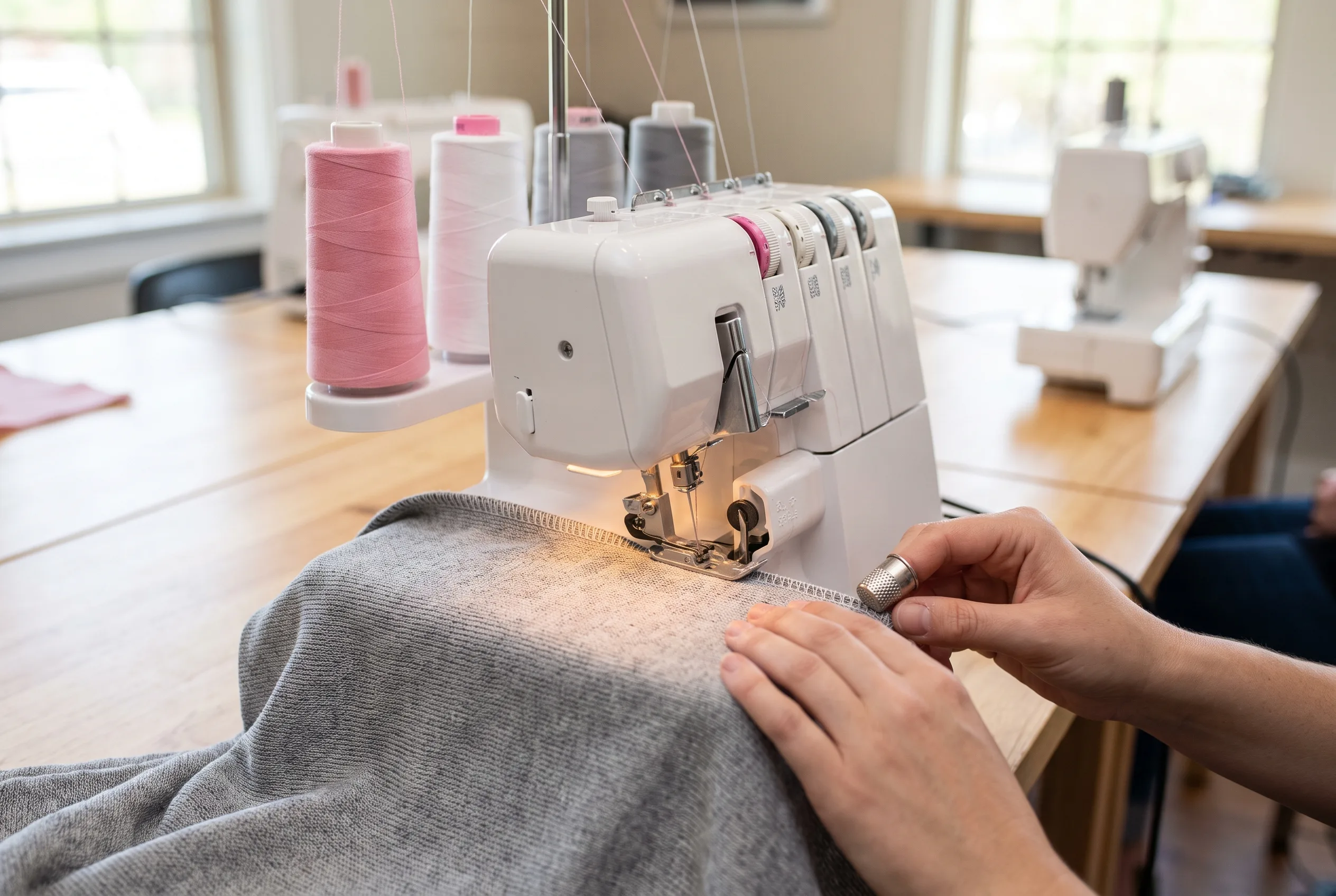
A serger is the machine most people buy, fail to thread, and put away. The threading path is longer and less obvious than a sewing machine, the tension dials feel arbitrary, and the blade is intimidating. So the machine sits in a cupboard and every garment keeps getting finished with a zigzag stitch.
This class exists to end that cycle. You learn to thread the machine without the cheat sheet, set tension by looking at the stitch rather than memorising numbers, change between a three thread overlock and a four thread safety stitch, and sew knit fabric without it stretching out of shape.
What is included
- Threading from scratch, including the looper sequence that trips everyone up
- Tension adjustment by reading the stitch, not by memorising numbers
- Three thread overlock, four thread safety stitch, and rolled hem
- Seam finishing on woven fabric so the inside looks professional
- Sewing knit and stretch fabrics with a differential feed
- Blade use, safety, and when to disengage the blade
Who this class is for
- You own a serger and cannot thread it reliably.
- You can thread it but the tension is never right.
- You want clean seam finishes inside your garments.
- You want to sew stretch and knit fabrics properly.
- You are considering buying a serger and want to try one first.
What the class covers
Threading
The full threading path, starting with the upper looper. Colour coded thread so you can see which thread is where in the finished stitch. Repeated until it is comfortable.
Tension
How to read a serger stitch and see which tension dial needs adjusting. This replaces the usual approach of memorising numbers, which fails the moment you change thread weight.
Stitch types
Three thread overlock for seam finishing, four thread for construction, and the rolled hem for edges and lettuce hems.
Stretch fabric
Differential feed, needle and thread choice, and why a serger handles knits better than a sewing machine. You sew a t-shirt seam and compare the result.
Class formats
Learn to use your serger
Two to three sessions covering threading, tension, and the main stitch types. The standard route.
Single threading session
One focused session if threading is the only thing stopping you. You arrive stuck and leave able to thread the machine from empty.
Knit fabric intensive
If you already serge wovens and want to learn stretch. Covers differential feed, needle types, and recovery from stretched-out seams.
Try before you buy
A session on a studio serger if you are deciding whether to invest in one. Cheaper than buying a machine you end up not using.
Ready to start?
Book your place or ask a question. We reply by phone the same day.
Why Students Choose Us
Threading taught from empty, not from the cheat card
The cheat card that came with the machine tells you the order but not the feel. Students thread a completely unthreaded machine in class, with guidance, until the sequence is in their hands and not on a diagram.
Tension taught by reading the stitch
We teach you to look at the stitch and see which dial to adjust, rather than memorising a number. Numbers change with thread weight, fabric weight, and stitch type. Reading the stitch works every time.
You can try a serger before buying one
A session on a studio serger costs far less than a machine you end up not using. If a serger is not the right tool for your kind of sewing, better to find out in class.
Why a serger matters in Austin
The Austin climate pushes towards lightweight wovens and knits for most of the year, and both benefit from a serger. Lightweight cotton and linen fray badly, and a serged seam finish prevents that far more reliably than a zigzag. Knits stretch under a regular machine foot, and a serger's differential feed controls that.
If you already sew garments in Austin and have not learned to serge, your inside seam finishes are probably the weakest point in your construction. This class closes that gap directly.
Common Questions
What is the difference between a serger and an overlocker?
Nothing. Serger is the American term, overlocker is the British and Australian term. They are the same machine.
Can I bring my own serger?
Yes, and it is often the best approach because you learn to thread and tension the machine you will actually use at home.
Is a serger a replacement for a sewing machine?
No. A serger finishes seams and handles stretch, but it cannot do topstitching, buttonholes, zips, or most decorative stitching. You need both.
I cannot thread my serger. Is this the right class?
Yes, that is the most common reason people book this class. Threading is the first thing covered.
Do I need one before I can sew clothes properly?
No, but your inside seam finishes will be cleaner and your knit seams will be stronger. A serger is not essential, but once you have used one, finishing seams with a zigzag feels like a compromise.
Ready to Learn?
Book your first class or call to ask a question.