Sewing Class
Learn to Alter and Tailor Your Own Clothes
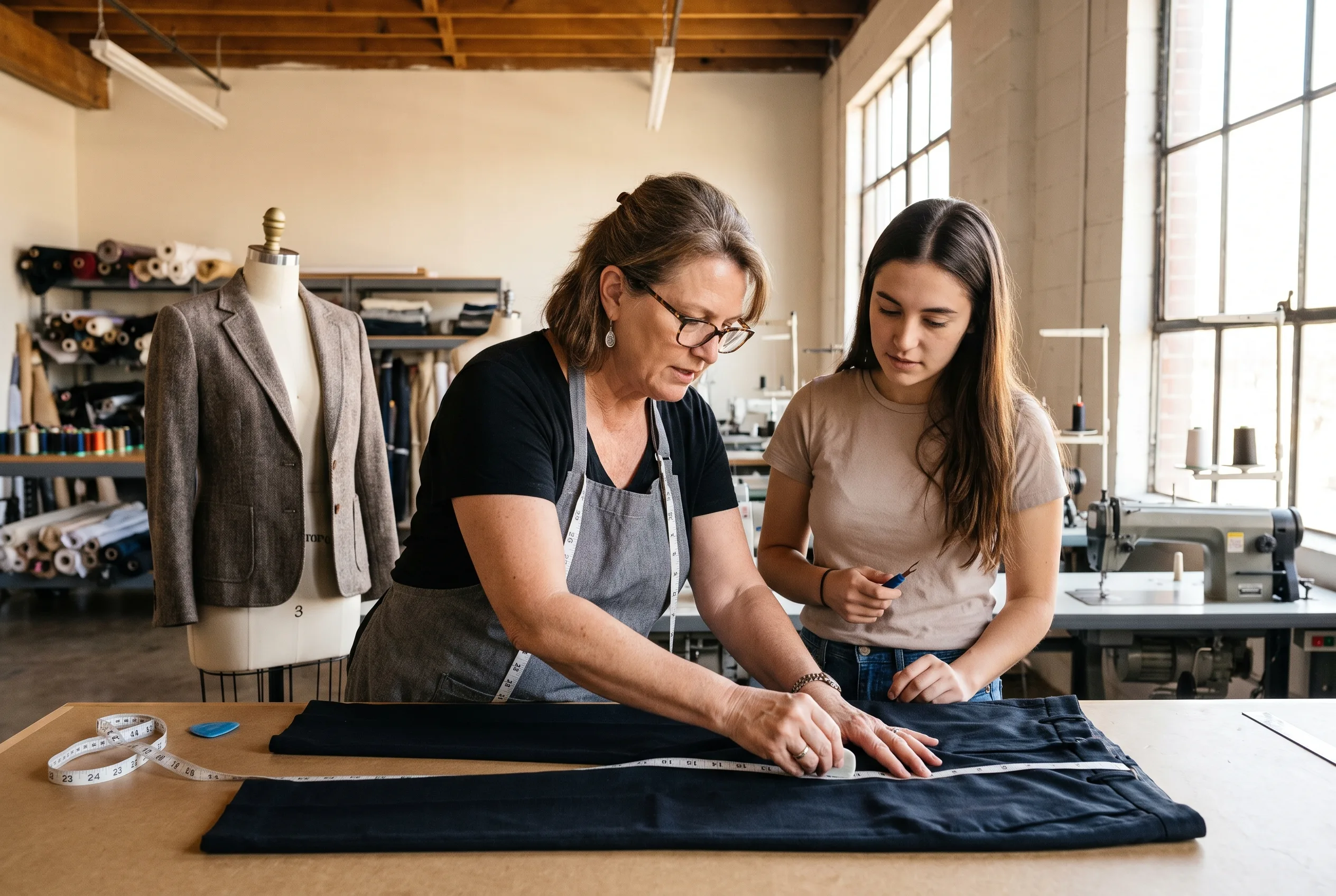
The single most practical thing you can learn on a sewing machine is how to alter clothes you already own. A pair of trousers that is two inches too long, a dress that pulls across the back, a jacket sleeve that needs shortening: these are the jobs that sit in a pile because the cost of a tailor feels wrong for a garment that cost less.
This class teaches you to do them yourself. You bring your own clothes, learn to pin and mark a fix, and do the work on a machine in the studio. By the end of a single session most people have shortened a hem, and by the end of a short course most can take in a waist, replace a zip, and patch a tear invisibly.
What is included
- Hemming by hand and by machine, including blind hems
- Taking in and letting out seams at the waist, hip, and side
- Replacing a broken zip in jeans, dresses, and jackets
- Invisible mending and patching for tears and worn spots
- Darning knits and reattaching buttons securely
- When to leave it alone: identifying alterations that are not worth attempting
Who this class is for
- Anyone with a pile of clothes that do not quite fit.
- People tired of paying a tailor for a five minute hem.
- Thrift and vintage shoppers who buy for fabric and style, not fit.
- Parents who want to let down hems and patch knees on children's clothes.
- Sewists who can sew a straight seam but have never altered a finished garment.
What you learn in the course
Hemming
Hand blind hems, machine hems, and when to use which. You bring trousers or a skirt that needs hemming and do the job in class, start to finish.
Taking in and letting out
Pinning a garment on your own body, marking the new line, and re-sewing the seam. Where there is enough seam allowance to let out, and where there is not.
Zip replacement
Removing a broken zip cleanly and installing a new one. Covered on jeans first, because a jeans fly zip is the job most people think is impossible and is actually straightforward.
Mending
Invisible mending on wovens, darning on knits, and patching where mending is not enough. Extending the life of a garment is as much a sewing skill as making one.
How to take this class
Short course
Four sessions covering hemming, taking in, zips, and mending. The broadest option and the one that builds real confidence, because you repeat techniques across several garments.
Single session
Bring one garment and one problem. Good for a specific fix, and you leave with the garment done.
Private lesson
One to one if the garment is valuable, unusual, or you want undivided attention. Wedding dress hems and vintage repairs are usually booked this way.
Ready to start?
Book your place or ask a question. We reply by phone the same day.
Why Students Choose Us
You bring your own clothes and fix them in class
This is not an exercise on sample fabric. You bring real garments that need real fixes, and you leave with them done. The motivation to do good work is higher when the outcome matters, and you immediately see the payoff.
The most common repair first
Hemming trousers is the single most requested alteration, so it is the first technique covered. Most students have shortened a pair by the end of session one, which means the class has already paid for itself.
We teach when to leave it alone
Not every garment is worth altering. Letting out a seam with no allowance, reshaping a shoulder, or tapering a leg on a pair of jeans will cost more effort than the result justifies. Knowing which jobs to walk away from saves time and fabric.
Why alteration skills matter in Austin
Austin has an unusually strong thrift and vintage shopping culture. Between South Congress, East Austin, and the Goodwill on South Lamar, there is a large supply of interesting clothes at low prices. The catch is that thrift finds rarely fit perfectly off the rail.
Learning to hem, take in a side seam, or swap a zip turns every thrift rail into a viable wardrobe source. Several students in this class arrived specifically because they thrift heavily and were spending as much on alterations as on the clothes themselves.
Common Questions
Is this a tailoring service where you alter my clothes for me?
No. This is a class where you learn to do the work yourself, on your own clothes, with an instructor guiding you through each step. You leave with the skills and the finished garment.
What should I bring to the first session?
One or two garments that need alterations. Trousers that need hemming are ideal for a first session because the result is immediate and satisfying.
Can I learn to alter clothes without a sewing machine at home?
Yes. Hemming, mending, and button repair are all done by hand. If you later want to do seam work and zips at home you will need a machine, but the hand techniques alone are worth learning.
How much sewing experience do I need?
You should be able to sew a straight seam. If you have never used a machine, take our beginner class first, then come back.
Can I learn to alter vintage or delicate clothing?
Yes. Vintage fabrics and trims need careful handling, and a private lesson is often the better format for anything valuable or irreplaceable.
Ready to Learn?
Book your first class or call to ask a question.